
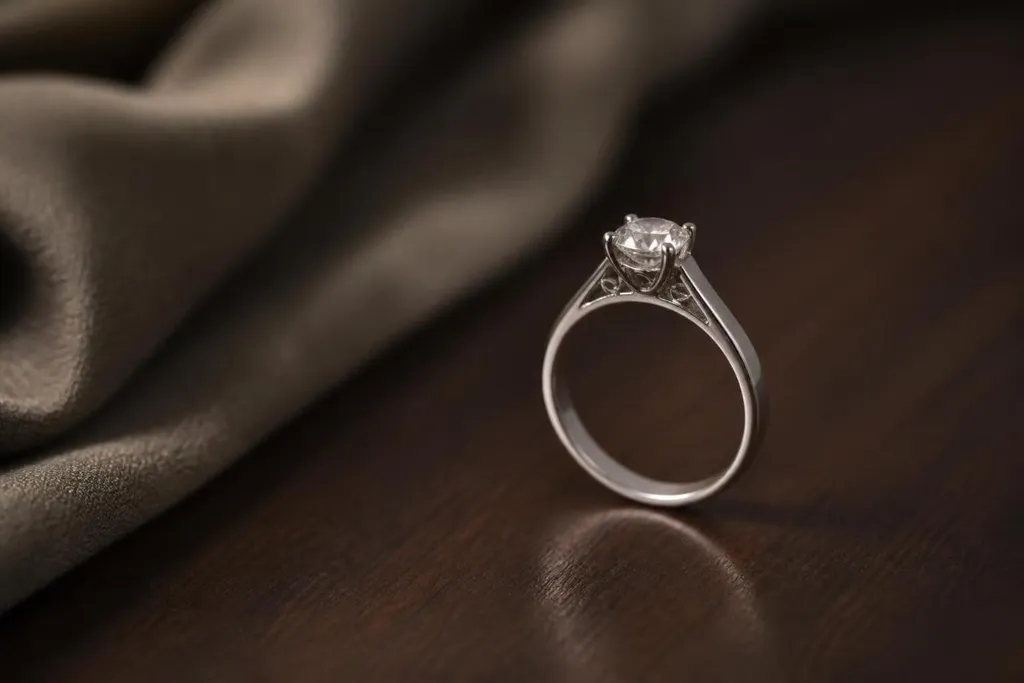
Some engagement-ring details are designed to command attention immediately. Others reveal themselves only when the ring is viewed from the side. An invisible diamond gallery belongs firmly in the second category. Positioned beneath the centre stone, this discreet detail introduces additional sparkle into an area that might otherwise consist entirely of structural metalwork. From above, the engagement ring can retain the clean character of a solitaire; from another angle, the hidden diamonds give it an unexpectedly intricate finish.
For someone who wants more detail without turning the ring into an overtly decorative design, this upgrade offers a particularly considered approach. The appeal lies in placement. Rather than competing with the centre stone through a visible halo or heavily pavé-set shoulders, the additional diamonds become a private detail incorporated into the architecture beneath it.
What Is an Invisible Diamond Gallery?
The gallery is the section of an engagement-ring setting positioned beneath the centre stone. It helps form the structure that supports the gemstone and connects its setting to the band.
In a conventional solitaire, this area may be formed primarily from polished precious metal. Adding diamonds to the gallery changes the side profile without necessarily altering the ring's appearance from directly above.
That distinction matters. Many people are attracted to solitaire engagement rings because of their simplicity. A traditional halo, for example, adds visible diamonds around the centre and changes its face-up outline. An invisible gallery can introduce extra brilliance while allowing the centre stone to retain its original silhouette.
The detail becomes apparent as the hand moves, particularly from side and three-quarter angles. This creates a more layered design: understated at first glance, yet more intricate on closer inspection.
Why Hidden Sparkle Can Feel More Refined
Adding more diamonds does not automatically make an engagement ring more sophisticated. Placement and proportion are far more important.
A hidden gallery works because its sparkle is restrained. The additional stones do not need to make the centre diamond look larger or dominate the overall design. Instead, they reward closer observation.
This can appeal to someone who wants a ring with personal details rather than obvious embellishment. The wearer may notice the gallery frequently while looking at the ring from different angles, even though it remains relatively discreet to others.
Centre-stone size can influence the effect. A 2-carat diamond, for example, creates greater visual presence above the gallery and may allow the side detailing to feel proportionate beneath it. Choosing a larger centre is therefore not only about face-up size; it can also create more architectural scope for refined details around and below the setting.
With a smaller centre stone, a delicate gallery can achieve a similar result provided the proportions remain controlled.
How the Gallery Changes the Side Profile
Engagement rings are often selected from photographs taken directly from above, but the side view is equally important in daily wear.
A diamond gallery gives the setting greater visual interest when viewed at finger level. Instead of seeing only claws and supporting metal beneath the centre, the eye catches small flashes of light within the structure.
This can be particularly effective on settings that raise the centre stone enough for the gallery to remain visible. The height should still feel balanced, however. A ring should not be made unnecessarily tall simply to expose decorative detailing.
Metal colour also affects the result. White gold or platinum can blend closely with colourless gallery diamonds, creating a bright, cohesive appearance. Yellow or rose gold introduces contrast between the small stones and the supporting structure, making the hidden detail more noticeable from the side.
The choice depends on whether the wearer wants the gallery to appear seamless or deliberately defined.
Everyday Care and Bridal Pairing
Small diamonds set beneath a centre stone create additional areas where soap, moisturiser and everyday residue can collect. Regular gentle cleaning helps maintain the flashes of brilliance that make the gallery worthwhile.
Periodic professional inspection is also sensible. A jeweller can check both the centre setting and the smaller diamond-set components for signs of wear.
The gallery should also be considered alongside the future wedding band. Depending on the engagement ring's architecture, a straight wedding ring may sit closely against the shank, while other settings may produce a slight gap or work better with a shaped band.
Thinking about the complete bridal stack early helps ensure that the hidden detailing remains attractive without compromising how comfortably the rings sit together.
Final Thought
An invisible diamond gallery is a good example of jewellery design that does not need to announce itself. It introduces sparkle beneath the centre stone while preserving the clean face-up appearance that makes a solitaire so enduring.
For someone who appreciates craftsmanship revealed gradually rather than obvious decoration, the detail can make an engagement ring feel considerably more individual. The centre stone remains the focus, but beneath it sits an additional layer of brilliance—subtle, personal and discovered through movement.